In this article (12 sections)
- Why creators matter more for early-stage D2C brands
- Is your D2C brand ready for creators?
- Creators first or paid ads first?
- A 90-day creator plan for a D2C brand starting from zero
- Matching creators to D2C categories
- How to brief creators for a D2C product
- Target cities and languages deliberately
- Tracking D2C creator sales
- Mistakes D2C brands make with creators
- Where Campayn fits
- Frequently asked questions
- Sources
D2C brands in India use creators to solve three problems that ads alone struggle with: trust, because a new brand has few reviews and no reputation; content, because brands need a steady supply of video showing the product in real use; and discovery, because reaching specific cities, languages and communities is hard with broad ads. For a D2C brand with a small Instagram presence and little or no creator marketing experience, a well-run creator campaign can build all three at once. The content it produces can then make paid ads work harder.
Most D2C guides are written for brands already at scale, with thousands of reviews and a content team. This one is written for the stage before that. For the fundamentals, see our complete guide to creator marketing. We say "creators" throughout for the people often called influencers.
Why creators matter more for early-stage D2C brands
The trust gap
A shopper deciding whether to buy from a brand they have never heard of looks for proof: reviews, real people using the product, some sign that others have bought it and been happy. New brands have little of this. A creator showing the product in their own home, in their own words, supplies that proof quickly, and in the Goat Agency and Kantar report, 70% of brands cited trust and credibility as their top reason for working with creators.
The content gap
Paid social ads run on video. Early brands rarely have enough of it, and what they have often looks like advertising. Creators make video in the native style of the platform, in many voices at once, and the best pieces can be reused as ads with the right permissions.
The discovery gap
A national ad campaign is an expensive way to reach "vegetarian gym-goers in Ahmedabad" or "first-time parents in Kochi". Creators already speak to audiences like these in their own language, which makes creator marketing one of the few affordable ways for a small brand to reach specific communities.
Is your D2C brand ready for creators?
Creators send attention. Make sure that attention has somewhere good to land:
- A product page or marketplace listing that loads quickly and explains the product clearly.
- At least some reviews or ratings.
- An Instagram profile with enough posts to look active when curious viewers visit.
- Stock and fulfilment that can handle a spike in orders.
- An offer worth using, such as a first-order discount, delivered through a unique code for each creator.
- A clear returns policy, because hesitant first-time buyers look for it.
If several of these are missing, fix them first. A campaign that sends viewers to a weak page wastes the one chance many of them will give you.
Creators first or paid ads first?
For most new D2C brands, creators first, then ads to scale what works. The two are complementary rather than competing.
Running ads with no social proof and weak creative is expensive, because viewers who do not trust the brand scroll past and the platform charges you for the privilege. A creator campaign builds the proof (comments, tags, visible usage) and produces the creative. Once you know which creator videos perform, Instagram's partnership ads let brands run creator posts as ads from the creator's handle, with the creator's permission, so the best content can be put in front of many more people.
The exception: if you already have strong reviews and proven creative, ads can come first and creators can follow to widen reach and refresh content.
A 90-day creator plan for a D2C brand starting from zero
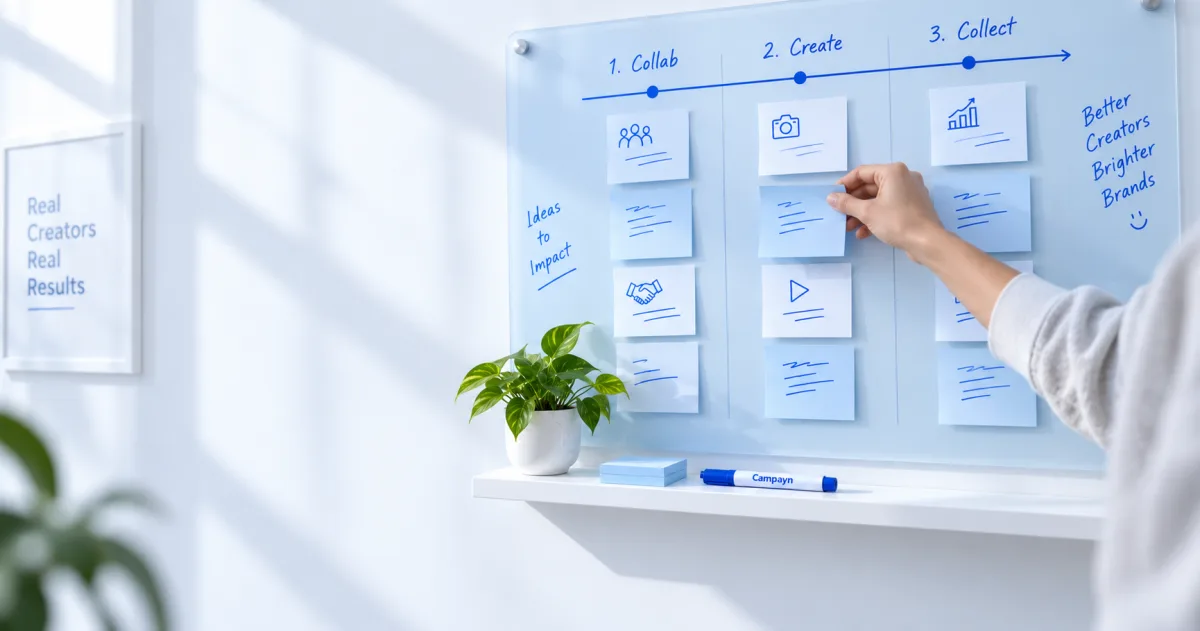
Days 1 to 30: Test
Work with several smaller creators rather than one large one. Give each the same offer but let them take different angles: a problem-solution demo, an honest review, a day-in-the-life integration, a comparison with what they used before. Give every creator a unique code and tracked link. The goal of this month is learning, not profit: which creators, angles and audiences respond?
Days 31 to 60: Double down
Rebook the creators whose content delivered efficient views and real sales. Brief new creators on the angles that worked. Start testing the best-performing creator videos as ads, if your agreements include usage rights. Drop what did not work without regret.
Days 61 to 90: Convert and scale
Push the proven angles harder: more creators in the cities and languages that responded, stronger offers for the best-converting audiences, and partnership ads behind the top content. By the end of the quarter, you should know your cost per verified view, your cost per attributed order and which creator profile works for your product.
| Phase | Main goal | What to measure | Decision at the end |
|---|---|---|---|
| Days 1 to 30 | Learn what works | Cost per verified view, code redemptions, comment quality | Which creators and angles to keep |
| Days 31 to 60 | Double down | Cost per attributed order, ad performance of creator content | Where to put more budget |
| Days 61 to 90 | Scale | Profit ROI, repeat purchase rate | Whether creators become an always-on channel |
Matching creators to D2C categories
The right creator is defined by the audience, not the category label. Still, some patterns hold across Indian D2C categories:
| Category | Creator types that tend to fit | Content that tends to work |
|---|---|---|
| Skincare and personal care | Routine and grooming creators, ingredient explainers | Honest before-and-after with realistic claims, routine integrations |
| Food and beverages | Food reviewers, home cooks, fitness creators | Taste tests, recipes using the product, office or gym snack routines |
| Fashion and footwear | Styling creators, college and lifestyle creators, meme pages for drops | Try-ons, styling one item three ways, launch-day hype |
| Home and kitchen | Home and family creators, regional cooking creators | Real-kitchen demos, problem-solution videos |
| Gadgets and accessories | Tech reviewers, gaming creators | Unboxing with honest pros and cons, in-use setups |
| Health and wellness | Fitness and lifestyle creators | Habit and routine content, with claims kept within what you can substantiate |
For health, wellness and skincare, be strict about claims. The ASCI guidelines advise creators to satisfy themselves that the advertiser can substantiate the claims in an ad, so give creators only claims you can back up.
How to brief creators for a D2C product
- Send the product early. Creators need time to use it genuinely before filming.
- Anchor the content in a real problem. "My hair frizzes in Mumbai humidity" beats a feature list.
- Give one offer and one code. Multiple offers confuse viewers and muddle tracking.
- Let creators say who the product is not for. Honest limits make the recommendation more credible.
- Ask for raw footage where possible. Extra clips are useful for ads, provided usage rights are agreed in writing.
Our campaign playbook includes a full brief template and contract checklist.
Target cities and languages deliberately
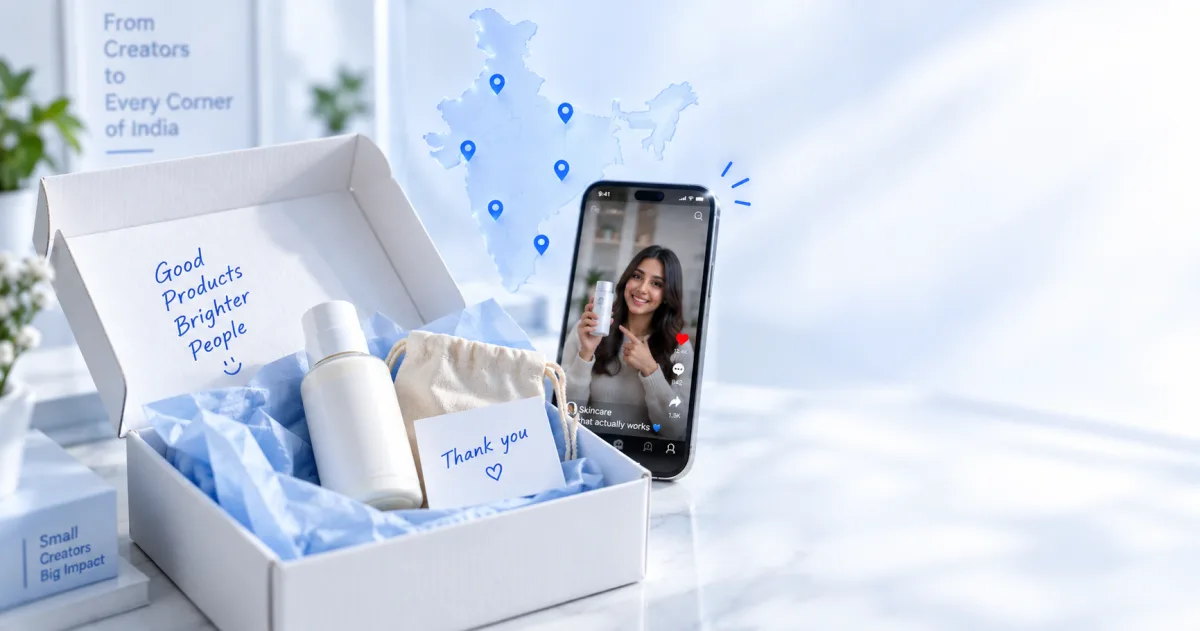
Many D2C brands find that orders concentrate in particular cities. Creators let you lean into that: start with creators whose audiences sit where your orders already come from, then expand city by city as you learn. Ask every creator for audience location data before booking, and consider creators who publish in the regional language of the cities you are targeting. Our guide on how to find the right creators covers how to check audience location.
Tracking D2C creator sales
Give each creator a unique discount code and a tracked link with UTM parameters, then read your store's discount report alongside your analytics. Add a "How did you hear about us?" question at checkout or after purchase, because many buyers will not use a code. Watch branded search and marketplace sales during the campaign too. Our guide to coupon code and UTM tracking walks through the full setup.
Mistakes D2C brands make with creators
- Mass gifting with no brief or follow-up. Sending product to dozens of creators and hoping some post rarely produces useful results.
- Choosing by follower count. Audience fit and typical views matter far more.
- Measuring only code sales. Codes capture a fraction of the effect.
- Running one campaign and stopping. The first campaign is where you learn. The second and third are where results improve.
- Forgetting usage rights. Brands often discover their best ad creative in a creator video they have no right to use.
- Getting the discount wrong. Too small and nobody uses the code; too large and the campaign cannot be profitable.
Where Campayn fits
Campayn is built for this stage. We work with brands that have a small Instagram presence and have done little or no creator marketing, which is exactly where creator content changes the most. Creators are vetted for content quality and audience fit using the Campy Score, campaigns run through one dashboard, and brands pay on a CPV (Cost Per Verified View) basis, so the cost of a first campaign follows the attention it actually delivers. If you are planning around a fixed budget, our guide to creator marketing for startups shows what different budgets can achieve.
Frequently asked questions
How do D2C brands use influencer marketing?
D2C brands use creators to build trust, produce video content and reach specific audiences. Creators show products in real use, which gives new brands the social proof they lack. The best creator videos are often reused as ads, and creators in particular cities and languages help brands reach communities that broad ads miss.
Should a new D2C brand start with creators or paid ads?
Most new D2C brands benefit from starting with creators and then using ads to scale what works. Creator campaigns build social proof and produce native video content, which makes later ads cheaper and more effective. Brands that already have strong reviews and proven ad creative can reasonably start with ads instead.
Which creators work best for D2C products?
The best creators are those whose audience matches your customer in language, city, age and interests, and whose content quality is high enough to reuse as advertising. Category fit helps, but audience fit matters more. Several smaller, well-matched creators usually outperform one large creator for a new D2C brand.
How much should a D2C brand spend on its first creator campaign?
Spend an amount you can afford to treat as a learning investment, spread across several creators so you can compare results. Include product, shipping and team time in the budget. Our startup budget guide shows what ₹50,000, ₹2 lakh and ₹5 lakh can realistically deliver under a per-view pricing model.
Can creator marketing work for D2C brands that sell mainly on Amazon or Flipkart?
Yes, although attribution is harder. Creators can drive viewers to marketplace listings, and brands can watch for sales and search lifts on those marketplaces during a campaign. Where possible, offer a code on your own website as well, and ask buyers how they discovered the brand.
How do I measure sales from creators for a D2C brand?
Give each creator a unique discount code and a tracked link with UTM parameters, then read your store's discount report alongside your analytics data. Add a post-purchase survey asking how buyers heard about you, and compare branded search and total orders during the campaign with a comparable earlier period.
Sources
- Business Standard, "India's influencer marketing industry to grow by 25% in 2025: Report" (The Goat Agency and Kantar), 11 June 2025: https://www.business-standard.com/industry/news/india-influencer-marketing-industry-to-grow-25-percent-in-2025-125061101048_1.html
- ASCI, "Guidelines for Influencer Advertising in Digital Media" (PDF): https://www.ascionline.in/social/wp-content/uploads/2024/03/ASCI-Guidelines-Influencer-Advertising-In-Digital-Media-1.pdf
Written by Nitin Pratap Singh, co-founder of Campayn.in.
About Campayn.in: Campayn.in is an AI-powered creator marketing platform for Indian brands. Brands launch, manage and measure creator campaigns through one dashboard and pay on a CPV (Cost Per Verified View) basis, with no agency retainer. To plan a campaign, write to contact@campayn.in.