In this article (12 sections)
- What is creator marketing?
- Creator marketing vs influencer marketing
- How creator marketing works: the 3C framework
- Types of creator partnerships
- Why Indian brands are investing in creators
- What creator marketing does well, and where it falls short
- How creator marketing is priced
- How to measure creator marketing
- Who should run your creator marketing
- A starting checklist
- Frequently asked questions
- Sources
Key takeaways
- Creator marketing pays independent creators to make and publish content for audiences that already trust them.
- The difference from traditional influencer marketing is what the brand buys: content and delivered attention, rather than access to a famous name.
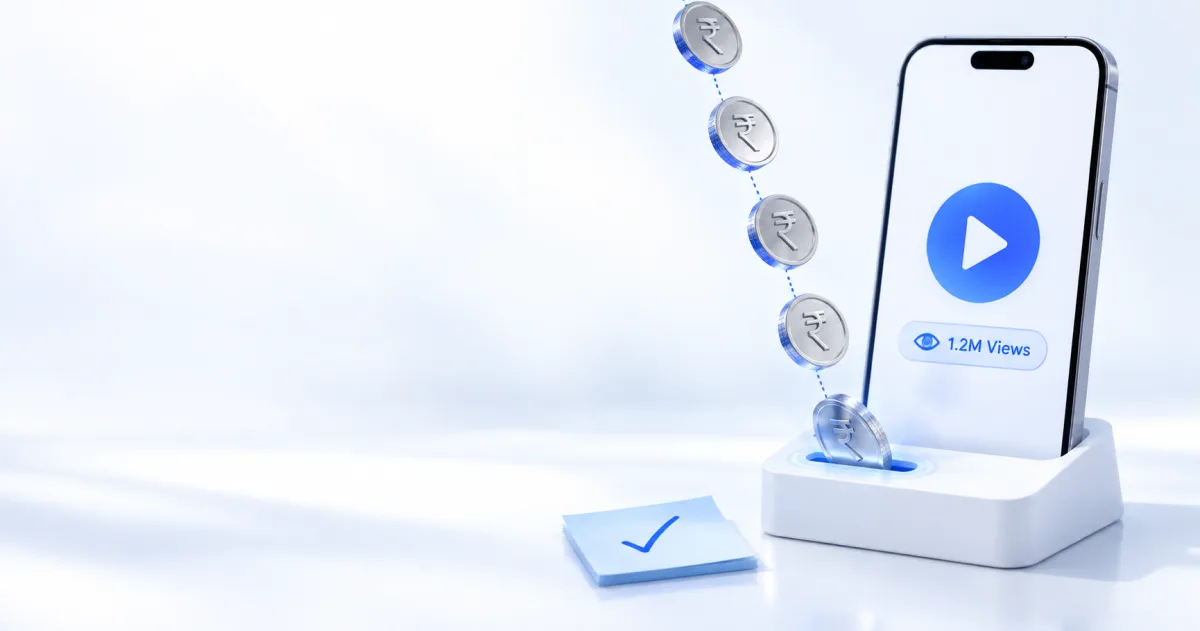
- Campaigns can be paid per post, per sale or per view. Campayn uses a CPV (Cost Per Verified View) model.
- Measure results in two layers: reach (verified views and cost per view) and revenue (sales tracked through coupon codes and tracked links).
Creator marketing is the practice of partnering with independent content creators so that your product appears inside content their audience already chooses to watch. The brand pays for the content, the attention it earns or the sales it drives, and the creator keeps their own voice, format and relationship with viewers.
In India, this has become a serious budget line. EY's State of Influencer Marketing in India report projected the industry to reach ₹3,375 crore by 2026, growing at about 18% a year. A separate report by The Goat Agency (WPP Media) and Kantar put the industry at ₹3,600 crore in 2024, with 25% growth expected in 2025. The estimates differ partly because they count different things (GroupM's earlier INCA estimates, for example, counted talent and production costs but not media spend), but they all point the same way.
This guide covers what creator marketing is, how it differs from influencer marketing, how a campaign actually runs, how it is priced and how to tell whether it worked. It is written for founders and marketers at Indian brands, particularly those running creator campaigns for the first time.
What is creator marketing?
Creator marketing is a marketing channel in which a brand works with people who publish content to their own audience, on Instagram, YouTube, meme pages and similar platforms, so that the brand's product, message or offer reaches that audience through content the creator makes. The creator's credibility with their viewers is what makes the channel work.
A creator is anyone who publishes consistently to people who follow them for that content: a Reels creator who reviews skincare, a YouTuber who explains personal finance in Hindi, a food page in Chennai, a meme page with a sharp sense of humour. What they have in common is attention they earned rather than attention they bought.
Every creator campaign involves the same set of parties:
- The brand, which wants to reach an audience and has something to offer it.
- The creator, who makes the content and publishes it on their own account.
- The audience, who decide whether the content is worth watching.
- The platform (Instagram, YouTube and others), which decides how widely content is distributed and reports how many times it was seen.
- An intermediary, in many cases: an agency, a creator marketing platform or an in-house team that finds creators, manages the work and measures results.
Creator marketing vs influencer marketing
Creators are often called influencers, and in everyday use the two terms overlap. The useful distinction is emphasis. Influencer marketing traditionally centred on a person's reach and endorsement. Creator marketing centres on the content itself and the attention it actually earns.
| Influencer marketing (traditional framing) | Creator marketing | |
|---|---|---|
| What the brand buys | Access to a person's following and endorsement | Content made by the creator, and the attention it earns |
| Main selection signal | Follower count and fame | Audience fit, content quality and delivered views |
| Typical partners | Celebrities and large accounts | Creators of every size, including niche, regional and meme pages |
| Typical pricing | Flat fee per post | Flat fee, per view, per sale or hybrids |
| How success is judged | Follower reach and likes | Verified views, engagement quality and attributed sales |
The shift matters because of how platforms now distribute content. Short-video feeds recommend posts based on how people respond to them, so a creator with a modest following can reach well beyond it, while a large account can underdeliver on any given post. Platform reporting has moved in the same direction: Instagram now uses views as its primary metric across formats, counting each time a Reel starts to play or replay. Follower count tells you how many people could see a post. Views tell you how many times it was actually seen.
How creator marketing works: the 3C framework
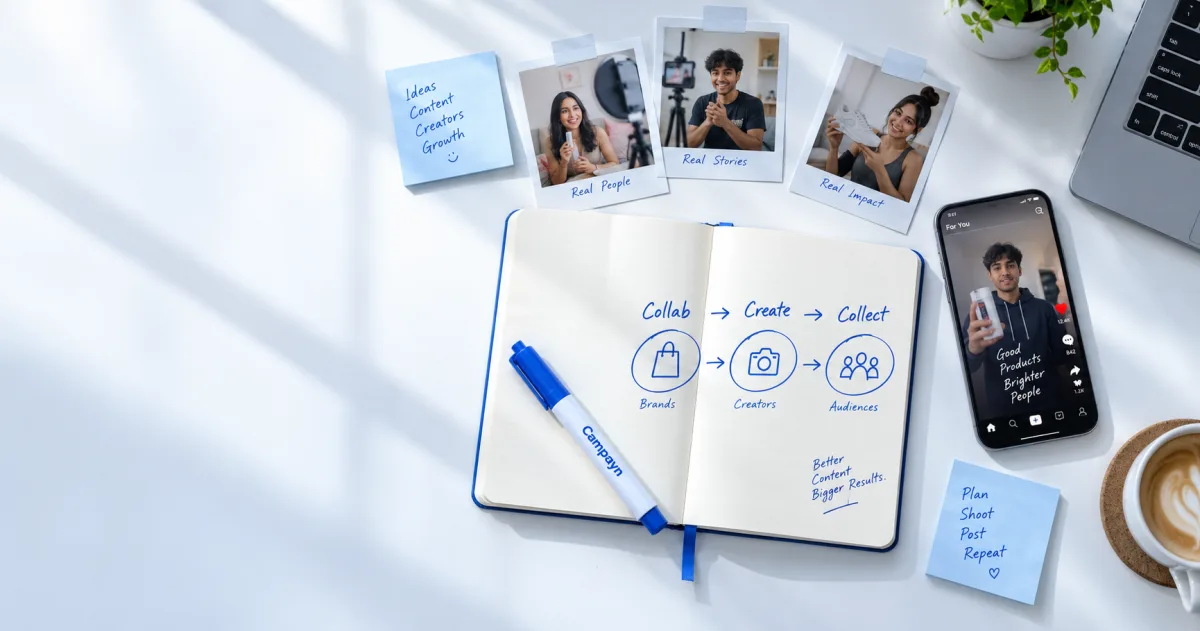
At Campayn, we break every creator campaign into three stages: Collab, Create and Collect. The framework is simple, but it stops teams from skipping the stages where most campaigns go wrong.
Collab: choosing and agreeing with creators
The brand defines who it wants to reach and what it wants them to do, then finds creators whose audience matches. Selection should rest on audience fit and content quality first, with follower count a distant third. Terms are agreed in writing: deliverables, timelines, payment, usage rights and disclosure. Our guide on how to find the right creators for your brand covers selection in detail.
Create: making content the audience wants to watch
The brand shares a brief, and the creator turns it into content in their own style. The brand reviews drafts for accuracy and compliance, not to rewrite the creator's voice. Paid content must carry a clear disclosure under the Advertising Standards Council of India (ASCI) guidelines. Content then goes live on a planned schedule.
Collect: measuring what happened
The brand gathers verified views, engagement, coupon code redemptions and tracked-link sales, compares them against cost and decides which creators and angles deserve more budget. Collect is where a campaign turns into a repeatable channel rather than a one-off. The full process is laid out step by step in our creator campaign playbook.
Types of creator partnerships
| Partnership type | How it works | Best for | Watch out for |
|---|---|---|---|
| Paid content | A flat fee for agreed deliverables, such as one Reel and two Stories | Launches, awareness, controlled messaging | You pay the same whether the post is seen 5,000 times or 5,00,000 times |
| Product seeding (barter) | Free product sent to creators, sometimes with no obligation to post | Very early brands, sampling, honest first reviews | Little control over whether and when content appears. Free products still count as a material connection that needs disclosure |
| Performance-priced (CPV) | The brand pays for verified views the content delivers | Predictable reach cost across many creators | View definitions differ by platform, so verification rules matter |
| Affiliate or commission | The creator earns per sale through a code or tracked link | Conversion-focused offers | Many creators decline pure commission, and it undervalues awareness |
| UGC for ads | Creators make videos the brand runs as its own ads | Paid social creative | Agree usage rights and duration in advance |
| Meme page distribution | The brand's message is packaged as a meme and posted by meme pages | Reaching young audiences quickly | Needs brand-safety guardrails and a light touch |
| Ambassador programmes | Long-term partnerships with repeated content | Building trust over time | A bigger commitment on both sides |
Most brands start with paid content or seeding. Brands that want cost to follow results tend to move toward performance-priced or hybrid models.
Why Indian brands are investing in creators
Trust. In the Goat Agency and Kantar report, 70% of brands cited trust and credibility as their top reason for working with creators. A recommendation from someone the viewer chose to follow carries a weight that a banner ad does not.
Language and geography. Indian audiences are split across languages, cities and subcultures. Creators already speak to specific slices of that audience, in their language, which is hard to replicate with one national campaign.
Content supply. A brand team can make a handful of videos a month. A group of creators can make dozens, each in a different style, and the best of them can be reused as ads.
Distribution. On recommendation-driven platforms, strong content can travel well beyond a creator's followers, so the cost of reach falls sharply when the content works.
What creator marketing does well, and where it falls short
Creator marketing is strong at building trust and consideration, producing a steady supply of video, reaching niche and regional audiences, and testing messages quickly across many voices.
It is weaker in three places, and brands should plan for them rather than be surprised by them:
- Attribution is imperfect. Many people watch a creator's video, then search for the brand days later. Coupon codes and tracked links capture only part of the effect.
- Results vary widely between creators. Two creators with similar followings can deliver very different results, which is why testing several creators beats betting everything on one.
- It cannot rescue a weak product or offer. Creators amplify what is already there. If reviews are poor or the website does not convert, more attention will not fix it.
How creator marketing is priced
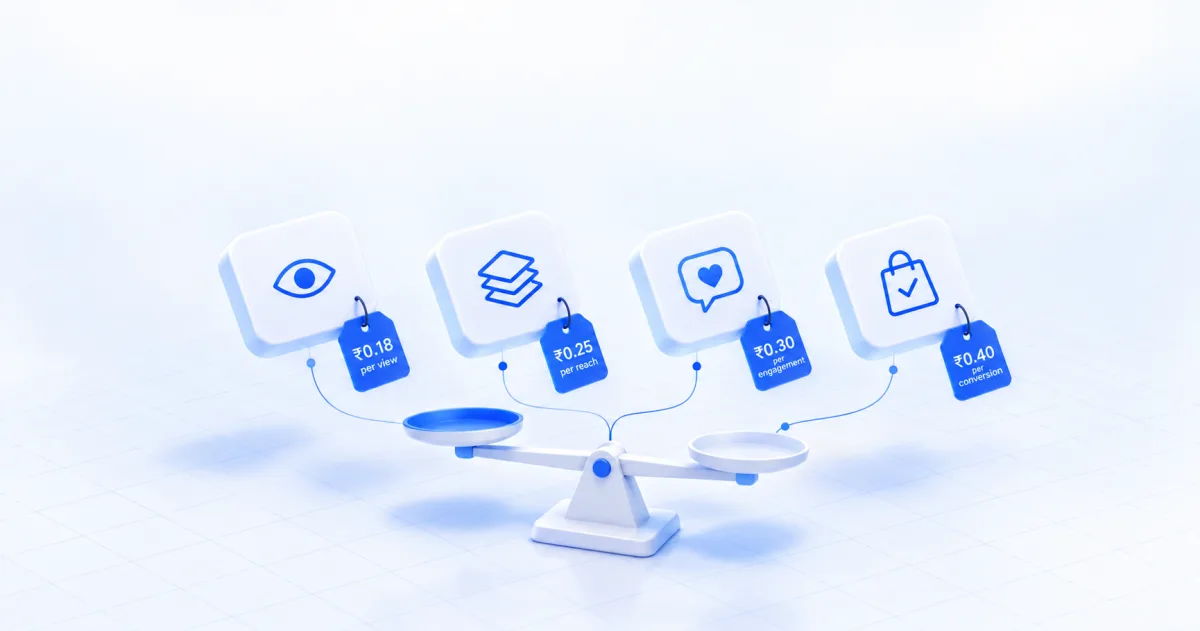
There are five common ways to pay for creator work: a flat fee per deliverable, barter (product in exchange for content), cost per view, commission per sale, and retainers or subscriptions charged by agencies and software platforms.
Under a per-view model, the brand pays in proportion to the views the content actually delivers rather than for a creator's follower count. Campayn uses this approach: brands pay on a CPV (Cost Per Verified View) basis, with no agency retainer. For the mechanics, see our explainer on what CPV means in influencer marketing and our comparison of CPV, CPM, CPE and CPA. If you are working with a limited budget, our guide to creator marketing for startups shows what different budgets can realistically deliver.
How to measure creator marketing
Measure in two layers:
- Reach: how many verified views the campaign delivered and what each one cost. This tells you whether you bought attention efficiently.
- Revenue: how many sales you can attribute to creators through unique coupon codes, tracked links and post-purchase surveys. This tells you whether that attention turned into business.
A campaign can do well on one layer and poorly on the other, and both results are useful. Our guide to influencer marketing ROI explains the formulas, and our guide to coupon code and UTM tracking covers the setup.
Who should run your creator marketing
There are three operating models. An agency handles strategy and execution for a fee or retainer. A creator marketing platform provides technology and, in some cases, managed execution, usually with more transparent pricing. An in-house team does everything directly. Each suits a different stage and budget, and our comparison of agency vs platform vs in-house walks through how to choose.
If you sell direct to consumers, our guide to creator marketing for D2C brands in India applies all of this to brands starting with a small social presence.
A starting checklist
- Confirm the product is ready: reviews, a working website or listing, and stock to handle a spike in orders.
- Pick one goal and one primary metric for the first campaign.
- Describe the audience you want to reach by language, city, age and interests.
- Set a test budget you can afford to learn from.
- Shortlist more creators than you need and vet them on audience fit and content quality.
- Give every creator a unique coupon code and a tracked link before anything goes live.
- Review results after views have settled and move budget toward what worked.
Frequently asked questions
What is creator marketing in simple words?
Creator marketing is when a brand pays or partners with people who make content online, such as Instagram and YouTube creators or meme pages, so that its product appears in content their followers already watch. The creator makes the content in their own style, and the brand benefits from the trust the creator has built with their audience.
Is creator marketing the same as influencer marketing?
The terms overlap and are often used interchangeably. The difference is emphasis. Influencer marketing traditionally focused on a person's follower count and endorsement. Creator marketing focuses on the content and the attention it actually earns, so brands judge creators on audience fit, content quality and delivered views rather than follower numbers alone.
How much does creator marketing cost in India?
Cost depends on the pricing model. Flat-fee rates vary widely by creator, category and platform. Under a per-view model, cost scales with delivered views: at an illustrative rate of ₹0.50 per verified view, a ₹1,00,000 budget would correspond to about 2,00,000 views. Actual rates depend on category, platform, language and creator mix.
Do small brands need big creators?
No. For most small and new brands, several smaller creators with the right audience outperform one large creator. They spread risk, produce more content to test and often reach a more specific audience. What matters most is whether a creator's viewers are the people the brand wants to reach.
Do creators have to disclose paid posts in India?
Yes. ASCI guidelines require clear disclosure whenever there is a material connection between the brand and the creator, including payment and free products. Permitted labels include Ad, Advertisement, Sponsored, Collaboration, Partnership and platform tags such as Instagram's Paid Partnership label. Both the brand and the creator carry responsibility.
Which platforms matter most for creator marketing in India?
For most Indian brands, Instagram (especially Reels) and YouTube (including Shorts) are the main platforms, because that is where most creator video is watched. Meme pages, which mostly run on Instagram, are a distinct channel for reaching younger audiences. The right mix depends on where a brand's customers actually spend their time.
Sources
- EY India, "How influencer marketing is impacting brands in India" (State of Influencer Marketing in India): https://www.ey.com/en_in/insights/media-entertainment/how-influencer-marketing-is-impacting-brands-in-india
- Business Standard, "India's influencer marketing industry to grow by 25% in 2025: Report" (The Goat Agency and Kantar), 11 June 2025: https://www.business-standard.com/industry/news/india-influencer-marketing-industry-to-grow-25-percent-in-2025-125061101048_1.html
- Buzzincontent, GroupM INCA Influencer Marketing Report 2.0 coverage, 30 November 2022: https://www.buzzincontent.com/story/indian-influencer-marketing-industry-to-grow-at-25-cagr-to-reach-rs-2-800-crore-in-2026-groupm-inca/
- Kolsquare, "Meta replaces impressions with views: What marketers should know": https://www.kolsquare.com/en/blog/views-are-the-new-impressions-what-metas-metrics-shift-means-for-influencer-marketing
- ASCI, "Guidelines for Influencer Advertising in Digital Media" (PDF): https://www.ascionline.in/social/wp-content/uploads/2024/03/ASCI-Guidelines-Influencer-Advertising-In-Digital-Media-1.pdf
Written by Utkarsh Gautam, founder and CEO of Campayn.in. He founded Campayn during his time at IIT Roorkee and leads its product, growth and brand partnerships.
About Campayn.in: Campayn.in is an AI-powered creator marketing platform for Indian brands. Brands launch, manage and measure creator campaigns through one dashboard and pay on a CPV (Cost Per Verified View) basis, with no agency retainer. To plan a campaign, write to contact@campayn.in.